Tag: indoor air quality

  • ☀️ How Southern California Weather Affects HVAC Equipment

    By Accurate Comfort HVAC | Brea | 714.325.7042

    How Southern California Weather Affects HVAC Equipment

    Southern California is known for its sunshine, warm summers, mild winters, and generally comfortable climate. However, the region’s unique weather patterns can place considerable stress on residential heating and cooling systems. From intense summer heat and dry Santa Ana winds to seasonal temperature swings, understanding how Southern California weather affects HVAC equipment is essential for maintaining reliable indoor comfort. At Accurate Comfort HVAC in Brea, we help homeowners protect their heating and cooling systems from weather-related wear, improve energy efficiency, and prevent unexpected breakdowns. If your system is struggling with changing weather conditions, call 714.325.7042 for professional HVAC maintenance in Brea and dependable heating and cooling solutions.

    ☀️ 1. Hot Southern California Summers Increase AC Wear

    Summer temperatures in Southern California can climb significantly, particularly in inland communities like Brea.

    During extended periods of hot weather, air conditioners must work harder to remove heat from indoor spaces and maintain comfortable temperatures.

    The hotter the outdoor air becomes, the more challenging it can be for an air conditioning system to release heat through its outdoor condenser.

    This can increase operating time, electricity consumption, and mechanical stress.

    Common Effects of Summer Heat on HVAC Systems:

    • Longer air conditioning cycles
    • Increased electrical consumption
    • Greater compressor workload
    • Higher outdoor condenser temperatures
    • More noticeable cooling performance problems
    • Increased risk of breakdowns in aging equipment

    An air conditioner that performs adequately during mild weather may struggle during a prolonged heat wave.

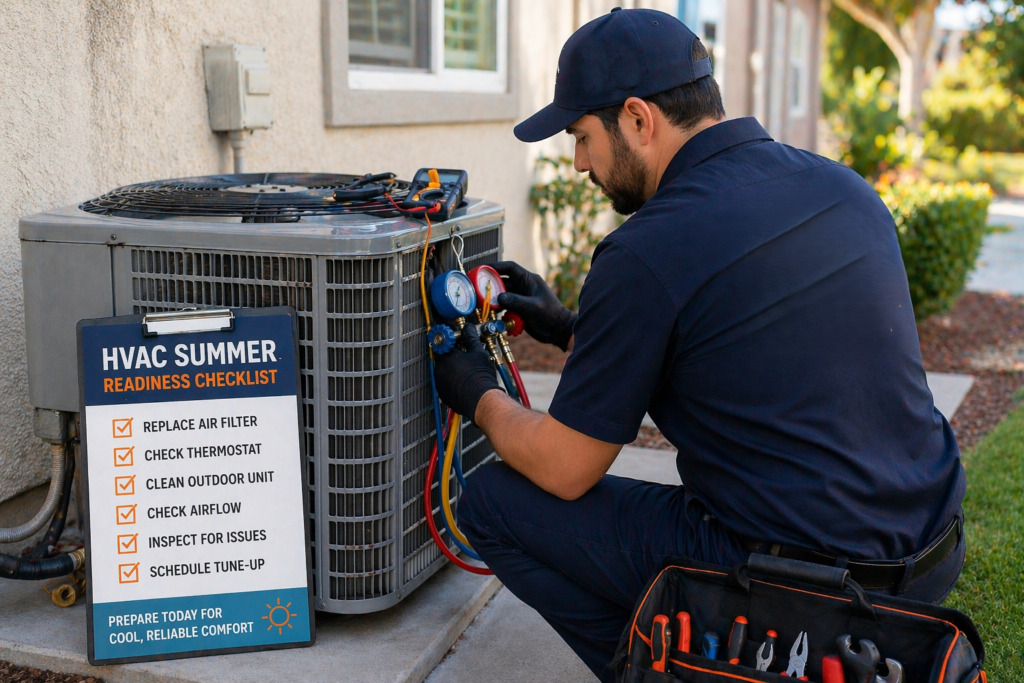
    Scheduling air conditioning maintenance before summer helps identify potential problems before cooling demand reaches its peak.

    🌬️ 2. Santa Ana Winds Bring Dust and Debris Into HVAC Systems

    Santa Ana winds are a familiar Southern California weather phenomenon.

    These strong, dry winds can carry dust, dirt, leaves, and other airborne particles throughout residential neighborhoods.

    When debris accumulates around outdoor HVAC equipment, it can restrict airflow and reduce cooling efficiency.

    Dust can also enter homes through open doors, windows, and building air leaks, increasing the amount of particulate matter captured by HVAC filters.

    How Santa Ana Winds Affect HVAC Equipment:

    • Outdoor condenser coils may collect additional dirt.
    • Leaves and debris can obstruct equipment airflow.
    • Indoor air filters may become dirty more quickly.
    • Dust can accumulate around vents and registers.
    • Poorly sealed ductwork may contribute to dust infiltration.

    HVAC Maintenance Tips During Windy Weather:

    • Inspect air filters more frequently.
    • Remove loose leaves and debris around outdoor equipment when it is safe.
    • Keep vegetation away from condenser units.
    • Check for visible damage after severe wind events.
    • Schedule professional condenser coil cleaning when needed.

    Avoid opening electrical panels or spraying electrical components with water.

    Regular HVAC system cleaning can help maintain airflow and reduce unnecessary equipment strain.

    🔥 3. Heat Waves Can Push Aging Air Conditioners to Their Limits

    Southern California heat waves can create sustained periods of high cooling demand.

    During these events, air conditioners may operate for extended periods to maintain indoor temperatures.

    Older systems or equipment with existing performance problems may struggle to keep up.

    Signs Your AC Is Struggling During a Heat Wave:

    • Indoor temperatures rise despite continuous operation.
    • Airflow from vents becomes weak.
    • The system cycles off unexpectedly.
    • Unusual noises develop.
    • Cooling performance declines.
    • Electricity bills increase substantially.

    A properly functioning system may run for long periods during extreme heat, so continuous operation alone does not necessarily indicate a malfunction.

    However, persistent inability to maintain comfortable temperatures should be evaluated.

    Professional AC repair in Brea can help identify airflow restrictions, refrigerant circuit problems, electrical faults, and other issues that affect cooling performance.

    🌡️ 4. Sudden Temperature Changes Affect Heating and Cooling Demand

    Southern California weather can change noticeably between daytime and nighttime.

    A warm afternoon may be followed by a cool evening, especially during transitional seasons.

    These temperature fluctuations can cause homeowners to alternate between heating and cooling.

    Although modern HVAC equipment is designed to handle normal temperature changes, existing thermostat problems or mechanical deficiencies may become more noticeable during frequent system operation.

    Potential Effects Include:

    • Frequent thermostat adjustments
    • Increased heating and cooling demand
    • Uneven indoor temperatures
    • Greater reliance on automatic system controls
    • Changes in energy consumption

    A properly configured thermostat can help maintain consistent comfort without unnecessary adjustments.

    For compatible systems, a smart thermostat installation may provide convenient scheduling, temperature management, and energy-saving features.

    Homeowners should also ensure their equipment is maintained for both heating and cooling operation.

    ❄️ 5. Mild Winters Can Still Create Furnace Problems

    Brea generally experiences milder winters than many other parts of the country.

    However, cooler mornings and evenings still make dependable heating important.

    Because furnaces may remain unused for much of the year, problems can go unnoticed until the first significant cold spell.

    Dust accumulation, aging ignition components, and electrical issues may interfere with heating performance.

    Common Winter Heating Problems Include:

    • Furnace ignition failures
    • Dirty air filters
    • Malfunctioning thermostats
    • Inconsistent heating
    • Unusual startup noises
    • Heating systems that cycle frequently

    Professional furnace maintenance in Brea can help prepare heating equipment for seasonal use.

    A maintenance visit may include checking ignition components, inspecting safety controls, evaluating airflow, and verifying proper system operation.

    Even in Southern California’s relatively mild climate, annual heating maintenance remains a valuable preventive measure.

    🌵 6. Dry Weather Can Influence Indoor Air Quality

    Southern California often experiences periods of low humidity, particularly during Santa Ana wind events.

    Dry outdoor conditions can influence indoor humidity levels, especially when outdoor air enters the home.

    Low indoor humidity may contribute to dry skin, irritated nasal passages, and static electricity.

    Dust and other airborne particles may also become more noticeable during dry, windy conditions.

    Ways to Support Better Indoor Air Quality:

    • Replace HVAC filters as recommended.
    • Keep return air pathways unobstructed.
    • Seal unwanted air leaks.
    • Maintain appropriate ventilation.
    • Monitor indoor humidity levels.
    • Consider professional indoor air quality improvements when needed.

    An indoor air quality assessment can help identify filtration, ventilation, and humidity concerns.

    The appropriate solution depends on the home’s construction, existing HVAC equipment, and indoor conditions.

    🌧️ 7. Rain and Moisture Can Affect Outdoor HVAC Components

    Although Southern California receives less annual rainfall than many other regions, seasonal storms can still affect outdoor HVAC equipment.

    Outdoor condenser units and heat pumps are designed to withstand normal weather exposure.

    However, excessive standing water, flooding, blocked drainage, and storm debris can create problems.

    Potential Rain-Related HVAC Issues:

    • Debris accumulating around outdoor units
    • Electrical components exposed to flooding
    • Corrosion developing over time
    • Drainage problems around equipment pads
    • Moisture damage to vulnerable ductwork

    After heavy rain, homeowners should check for visible debris and standing water around outdoor equipment.

    If a unit has been submerged or exposed to flooding, do not operate it until a qualified professional has inspected it.

    Routine HVAC equipment inspections can help identify drainage concerns, corrosion, and weather-related damage.

    🌫️ 8. Wildfire Smoke Can Affect HVAC Filters and Indoor Air Quality

    Wildfire smoke is an important air quality concern in Southern California.

    During wildfire events, smoke particles can travel considerable distances and affect communities far from the fire itself.

    Fine particulate matter may enter homes through ventilation systems, gaps around doors and windows, and other openings.

    HVAC filtration can play an important role in reducing indoor airborne particles when the system uses appropriately rated filters.

    Ways to Protect Indoor Air During Smoke Events:

    • Keep windows and exterior doors closed when outdoor air quality is poor.
    • Use a compatible, appropriately rated HVAC filter.
    • Inspect filters more frequently during prolonged smoke exposure.
    • Set compatible systems to recirculate indoor air rather than introduce unfiltered outdoor air.
    • Consider portable HEPA air cleaners for additional filtration.
    • Follow local air quality and public health guidance.

    Filters rated MERV 13 or higher can capture more fine particles than many lower-rated filters, but the HVAC system must be capable of handling the filter’s airflow resistance.

    Professional HVAC air filtration upgrades can help homeowners choose appropriate filtration without compromising system performance.

    ⚡ 9. High Cooling Demand Can Increase Energy Costs

    Weather conditions directly influence how much electricity an air conditioning system uses.

    During hot periods, your cooling equipment may operate longer to maintain the thermostat setting.

    If the system has dirty coils, restricted airflow, or worn components, electricity consumption may increase further.

    Factors That Can Raise Cooling Costs:

    • Extended heat waves
    • Poor attic insulation
    • Leaking ductwork
    • Dirty condenser coils
    • Inefficient older equipment
    • Excessive thermostat adjustments
    • Air leaks around windows and doors

    Improving HVAC energy efficiency involves more than installing a newer air conditioner.

    Proper maintenance, insulation improvements, duct sealing, and thermostat management can all help reduce unnecessary cooling demand.

    An energy-efficient HVAC system can also provide long-term benefits when properly sized and installed.

    🌀 10. Dusty Conditions Can Restrict Airflow

    Airflow is essential for efficient heating and cooling.

    When dust and debris accumulate in filters, coils, and blower components, the system may struggle to move enough air.

    Restricted airflow can reduce comfort and contribute to equipment problems.

    In cooling systems, severe airflow restrictions can contribute to evaporator coil icing.

    In heating systems, inadequate airflow can cause overheating and trigger protective safety controls.

    Warning Signs of Restricted Airflow:

    • Weak airflow from supply vents
    • Uneven room temperatures
    • Excessive dust accumulation
    • Frozen evaporator coils
    • Longer heating or cooling cycles
    • Unusual equipment shutdowns

    Routine HVAC filter replacement is one of the simplest ways to support proper airflow.

    Filter replacement intervals depend on filter design, household conditions, pets, and local dust exposure.

    Homes affected by frequent wind and dust may require more frequent inspections.

    🏠 11. Older Brea Homes May Be More Vulnerable to Weather-Related HVAC Problems

    Many older homes were constructed before current insulation, energy efficiency, and HVAC design practices became widespread.

    As a result, some properties may experience greater indoor temperature fluctuations during hot or windy weather.

    Common Challenges in Older Homes Include:

    • Insufficient attic insulation
    • Aging ductwork
    • Air leakage around windows and doors
    • Outdated cooling equipment
    • Poorly balanced airflow
    • Inadequate return air pathways

    During hot weather, these conditions can make certain rooms significantly warmer than others.

    A professional residential HVAC evaluation can help determine whether cooling problems originate from the equipment, ductwork, or building envelope.

    In many cases, targeted improvements can enhance comfort without requiring a complete system replacement.

    🌴 12. Outdoor HVAC Equipment Needs Proper Airflow

    Your outdoor condenser unit releases heat collected from inside the home.

    For this process to work effectively, the unit needs adequate airflow.

    Southern California landscaping, windblown debris, and outdoor storage can interfere with condenser operation when placed too close to the equipment.

    Outdoor Unit Maintenance Tips:

    • Keep vegetation trimmed according to manufacturer clearance requirements.
    • Remove loose leaves and debris from the surrounding area.
    • Avoid placing storage containers near the condenser.
    • Do not cover an operating air conditioner.
    • Inspect for visible damage after storms or strong winds.
    • Schedule professional coil cleaning when necessary.

    Proper airflow helps the outdoor unit release heat more effectively and supports reliable cooling performance.

    Professional air conditioner maintenance in Brea can help ensure the condenser is operating as intended.

    🔧 13. Regular HVAC Maintenance Helps Prevent Weather-Related Breakdowns

    Preventive maintenance is one of the most effective ways to prepare HVAC equipment for Southern California’s changing conditions.

    A professional maintenance visit allows technicians to evaluate important components and identify potential issues before they become major problems.

    A Comprehensive HVAC Maintenance Visit May Include:

    • Inspecting air filters
    • Checking refrigerant system performance
    • Cleaning condenser coils as needed
    • Evaluating blower operation
    • Testing electrical components
    • Inspecting condensate drainage
    • Verifying thermostat operation
    • Checking safety controls
    • Measuring system airflow
    • Evaluating overall heating and cooling performance

    For many residential systems, scheduling cooling maintenance before summer and heating maintenance before winter is a practical approach.

    Regular preventive HVAC maintenance can support equipment reliability, improve operating efficiency, and help reduce the likelihood of unexpected breakdowns.

    💡 14. Smart Thermostats Can Help Manage Changing Weather

    A smart thermostat can make temperature management more convenient during Southern California’s changing seasons.

    Many models offer programmable schedules, remote access, and energy usage information.

    Some compatible systems can also use remote temperature sensors to improve comfort in frequently occupied rooms.

    Potential Smart Thermostat Benefits:

    • Automatic temperature scheduling
    • Remote control through a smartphone
    • Convenient heating and cooling adjustments
    • Energy usage monitoring
    • Maintenance reminders
    • Improved comfort management

    However, smart thermostats must be compatible with the existing heating and cooling equipment.

    Professional thermostat installation in Brea can help ensure the device is correctly configured for the system.

    💰 15. When Should Weather-Related HVAC Problems Lead to Replacement?

    Not every weather-related HVAC problem requires new equipment.

    Many issues can be corrected through maintenance, airflow improvements, or component repairs.

    However, replacement may become worth considering when an aging system consistently struggles during hot weather or requires repeated expensive repairs.

    Signs It May Be Time for HVAC Replacement:

    • Equipment is approaching the end of its expected service life.
    • Major repairs are becoming frequent.
    • Cooling performance has noticeably declined.
    • Electricity consumption is unusually high.
    • The system cannot maintain comfortable temperatures.
    • Replacement parts are difficult or expensive to obtain.

    A professional HVAC replacement evaluation can help compare repair costs, system condition, and the potential benefits of modern equipment.

    Newer systems may offer higher efficiency ratings, improved temperature control, and more advanced operating features.

    The best choice depends on the home’s cooling requirements, equipment condition, and homeowner priorities.

    📅 16. Seasonal HVAC Maintenance Tips for Brea Homeowners

    Southern California’s climate makes year-round HVAC preparation important.

    A seasonal maintenance plan can help homeowners stay ahead of weather-related problems.

    🌷 Spring: Prepare for Summer

    • Schedule professional AC maintenance.
    • Inspect and replace dirty filters.
    • Clear debris around outdoor equipment.
    • Check thermostat operation.
    • Address existing airflow problems.

    ☀️ Summer: Monitor Cooling Performance

    • Watch for unusual noises or reduced cooling.
    • Keep outdoor units unobstructed.
    • Monitor indoor temperatures.
    • Inspect filters during dusty conditions.
    • Schedule service if cooling performance declines.

    🍂 Fall: Prepare for Cooler Weather

    • Schedule heating system maintenance.
    • Inspect furnace operation.
    • Check thermostat heating settings.
    • Evaluate air filtration after windy weather.
    • Address developing mechanical problems.

    ❄️ Winter: Maintain Reliable Heating

    • Monitor heating performance.
    • Keep supply and return vents clear.
    • Replace filters when necessary.
    • Check for unusual furnace noises.
    • Schedule repairs if heating becomes inconsistent.

    Following a seasonal HVAC maintenance checklist can help protect your equipment and support dependable indoor comfort throughout the year.

    🛠️ 17. When Should You Call an HVAC Professional?

    Weather-related performance changes are not always signs of equipment failure.

    However, certain symptoms should be evaluated promptly.

    Consider professional service if:

    • Your air conditioner cannot maintain comfortable temperatures.
    • Heating or cooling equipment repeatedly shuts down.
    • Airflow becomes noticeably weaker.
    • Unusual electrical or mechanical noises develop.
    • Water leaks appear around indoor equipment.
    • Energy consumption increases unexpectedly.
    • Your system frequently requires repairs.

    If you notice burning electrical odors, smoke, or other signs of a serious malfunction, shut off the equipment if it is safe to do so and seek professional assistance.

    For suspected gas leaks or carbon monoxide emergencies, evacuate the building and contact emergency services or your gas utility from a safe location.

    Professional heating and cooling repair can help identify the source of equipment problems and restore reliable operation.

    ❄️ Protect Your HVAC System From Southern California Weather

    From scorching summer temperatures and dry Santa Ana winds to seasonal rainstorms and cooler winter evenings, Southern California weather affects HVAC equipment in several important ways. Dust accumulation, extended cooling cycles, airflow restrictions, and changing heating demands can all influence equipment performance and long-term reliability. With regular maintenance and timely repairs, homeowners can help protect their systems and maintain dependable comfort throughout the year. At Accurate Comfort HVAC, we provide professional HVAC maintenance in Brea, AC repair, furnace service, and energy-efficient HVAC solutions tailored to local conditions. Don’t let unpredictable weather compromise your home’s comfort. Call 714.325.7042 today to schedule professional HVAC service and keep your heating and cooling equipment ready for every season.
  • 🌿 How Indoor Air Quality Affects Your Family’s Health and Comfort

    By the HVAC Comfort Team | Brea | 714.325.7042

    How Indoor Air Quality Affects Your Family’s Health and Comfort

    The air inside your home can influence how comfortable family members feel and may affect their health. Accurate Comfort HVAC helps Brea homeowners understand how ventilation, filtration, humidity, HVAC maintenance, and pollutant sources contribute to indoor air quality. Although heating and cooling equipment is only one part of the solution, a properly maintained system can support cleaner, more comfortable indoor air.

    Indoor air may contain particles, moisture, gases, odors, and biological contaminants from both indoor and outdoor sources. Common pollutants include smoke, mold, particulate matter, carbon monoxide, radon, pet dander, dust mites, and volatile organic compounds.

    The effects vary according to the pollutant, concentration, length of exposure, and individual sensitivity. Some people experience noticeable symptoms, while others may not react at all.

    🏠 What Is Indoor Air Quality?

    Indoor air quality, commonly abbreviated as IAQ, describes how the air inside a building affects the health and comfort of its occupants.

    Indoor conditions are influenced by:

    • Pollutant sources
    • Outdoor air quality
    • Ventilation
    • HVAC filtration
    • Indoor humidity
    • Building materials
    • Household activities
    • Cleaning products
    • Fuel-burning appliances
    • Pets and pests
    • Water leaks
    • Occupant behavior

    The rate at which indoor air is exchanged with outdoor air also affects pollutant concentrations. Natural infiltration, open windows, exhaust fans, and mechanical ventilation can all change that exchange rate. The EPA explains that outdoor climate, building design, weather, and occupant behavior also influence indoor air quality.

    👀 How Poor Indoor Air May Affect Your Family

    The health effects associated with indoor pollutants depend on many variables. Possible short-term effects may include:

    • Eye irritation
    • Nose or throat irritation
    • Headaches
    • Dizziness
    • Fatigue
    • Coughing
    • Wheezing
    • Nasal congestion

    Long or repeated exposure to certain pollutants has been associated with more serious health effects. Individual responses differ, and symptoms that occur at home may have causes unrelated to indoor air.

    Children, older adults, and people with asthma, allergies, chronic lung disease, cardiovascular conditions, or weakened immune systems may be more susceptible to certain pollutants.

    If someone experiences persistent or severe symptoms, seek guidance from a qualified healthcare professional. An HVAC inspection cannot diagnose a medical condition.

    🤧 Allergies and Airborne Irritants

    Pollen, pet dander, dust-mite material, mold particles, and pest debris may trigger allergic reactions in sensitive individuals.

    Possible symptoms include:

    • Sneezing
    • Runny or congested nose
    • Itchy or watery eyes
    • Coughing
    • Skin irritation
    • Throat discomfort

    Many allergens settle on floors, furniture, bedding, and other surfaces rather than remaining continuously suspended in the air. Filtration may reduce certain airborne particles, but it does not replace regular cleaning or removing the pollutant source.

    Use a complete approach that may include:

    • Compatible HVAC filtration
    • Regular vacuuming
    • Damp dusting
    • Washing bedding
    • Controlling indoor moisture
    • Grooming pets
    • Addressing pest problems
    • Limiting open windows when outdoor pollen is high

    🫁 Asthma and Respiratory Sensitivity

    Indoor pollutants can aggravate respiratory symptoms in some people. Potential triggers may include smoke, mold, dust mites, pet allergens, strong fragrances, combustion pollutants, and fine particles.

    Mold is particularly concerning for certain individuals. The CDC reports that damp or moldy environments may cause no effects in some people but can contribute to stuffy nose, sore throat, coughing, wheezing, burning eyes, or skin rash in others. People with asthma, mold allergies, weakened immune systems, or chronic lung disease may face greater risks. CDC mold and health guidance

    Families managing asthma should follow the affected person’s medical treatment plan and discuss possible environmental triggers with a healthcare provider. HVAC improvements can support indoor conditions, but they are not a substitute for medical care.

    🌫️ Fine Particles Inside the Home

    Particulate matter consists of small solid particles and liquid droplets suspended in the air. Indoor particles can enter from outside or originate from activities inside the home.

    Potential sources include:

    • Cooking
    • Candles
    • Fireplaces
    • Tobacco smoke
    • Unvented heaters
    • Dust-producing hobbies
    • Outdoor pollution
    • Vacuuming and cleaning
    • Construction or remodeling

    Particle size matters because smaller particles can travel more deeply into the respiratory system. People with heart or lung disease, children, and older adults may be more susceptible to particle exposure. EPA guidance on indoor particulate matter

    Source control, ventilation when outdoor conditions are suitable, and appropriately selected filtration can help reduce exposure.

    🦠 Mold and Moisture

    Mold can grow when spores encounter sufficient moisture. Common locations include areas affected by:

    • Roof leaks
    • Plumbing leaks
    • Window leaks
    • Condensation
    • Flooding
    • Wet carpet
    • Damp drywall
    • High indoor humidity
    • Clogged HVAC drains

    If you see or smell mold, address both the growth and the source of moisture. Cleaning visible mold without correcting the leak or humidity problem may allow it to return.

    Wet materials should be dried promptly. Porous materials that cannot be cleaned and dried may require removal. Large contamination areas, sewage-related water, or conditions affecting vulnerable occupants may require professional remediation.

    Do not rely on an air purifier to solve an active moisture problem. The moisture source must be corrected.

    💧 Indoor Humidity and Comfort

    Humidity affects both comfort and indoor environmental conditions. Air that is excessively humid may feel warm, sticky, or uncomfortable. Persistent moisture can also support mold growth and dust-mite populations.

    Very dry air can contribute to:

    • Dry skin
    • Irritated eyes
    • Dry nasal passages
    • Static electricity
    • Shrinking or cracking of certain wood materials

    The EPA generally recommends keeping indoor relative humidity below 60%, ideally between approximately 30% and 50%, while recognizing that appropriate conditions vary. EPA guidance on biological contaminants and humidity

    Use a hygrometer to monitor conditions instead of relying only on how the air feels. If humidity remains high while the air conditioner is operating, the system may need maintenance or a separate moisture-control strategy.

    🧪 Volatile Organic Compounds

    Volatile organic compounds, or VOCs, are gases released by certain solids and liquids. Potential household sources include:

    • Paints
    • Adhesives
    • Cleaning supplies
    • Pesticides
    • Air fresheners
    • Hobby products
    • New furnishings
    • Pressed-wood materials
    • Stored fuels
    • Personal-care products

    Possible effects depend on the specific chemical, concentration, and exposure time. Some VOCs may contribute to eye, nose, and throat irritation, headaches, dizziness, or nausea.

    Follow product labels, store materials correctly, and increase ventilation when using products that release VOCs—provided outdoor air quality and weather conditions are suitable. EPA guidance on VOCs and indoor air

    🚨 Carbon Monoxide Requires Special Attention

    Carbon monoxide is a colorless, odorless, toxic gas produced by incomplete combustion. Potential sources include malfunctioning furnaces, gas appliances, fireplaces, generators, vehicle exhaust, and unvented fuel-burning heaters.

    Exposure may cause:

    • Headache
    • Dizziness
    • Weakness
    • Nausea
    • Confusion
    • Fatigue
    • Impaired coordination

    High concentrations can be fatal. Every home with fuel-burning equipment or an attached garage should have properly located and functioning carbon-monoxide alarms.

    Never use a portable generator inside a home, garage, crawlspace, or other enclosed area. If a carbon-monoxide alarm sounds, leave the building and follow the alarm manufacturer’s instructions and local emergency guidance. Do not search for the source yourself. EPA carbon-monoxide safety information

    🚭 Smoke and Combustion Pollutants

    Tobacco smoke, fireplaces, candles, cooking, and improperly vented appliances can release gases and particles indoors.

    To reduce exposure:

    • Keep the home and vehicle smoke-free
    • Use kitchen exhaust that vents outdoors
    • Maintain fuel-burning appliances
    • Operate fireplaces correctly
    • Avoid using unvented combustion appliances
    • Never burn materials not intended for the appliance
    • Maintain smoke and carbon-monoxide alarms

    An HVAC filter cannot eliminate all smoke-related gases and particles. Preventing or controlling the source is more effective.

    🌬️ Why Ventilation Matters

    Ventilation helps replace indoor air with outdoor air and can dilute pollutants produced inside the home.

    Ventilation may come from:

    • Open windows and doors
    • Bathroom exhaust fans
    • Kitchen range hoods
    • Mechanical ventilation systems
    • Normal building leakage

    More outdoor air is not always better. Avoid opening windows when outdoor air pollution, wildfire smoke, pollen, heat, or humidity is high.

    Use bathroom fans during and after showers, and operate a range hood that vents outside while cooking. Clothes dryers should also vent outdoors.

    Mechanical ventilation equipment should be properly installed, operated, and maintained according to its manufacturer’s instructions.

    🎯 Source Control Comes First

    The EPA identifies three fundamental approaches to improving indoor air: controlling pollutant sources, improving ventilation, and using filtration or air cleaning. Source control is generally the most effective starting point. EPA indoor-air-quality guidance

    Examples of source control include:

    • Repairing plumbing and roof leaks
    • Preventing indoor smoking
    • Venting combustion appliances correctly
    • Removing damaged, moldy materials
    • Storing chemicals safely
    • Selecting lower-emission products
    • Managing pests without excessive pesticide use
    • Using exhaust ventilation while cooking
    • Removing debris rather than only trying to filter it

    Filtration can support these efforts, but it cannot compensate for a continuing pollutant source.

    🧹 The Role of Your HVAC Filter

    A central HVAC filter captures particles as return air passes through the system. Its performance depends on filter design, airflow, system runtime, installation, and maintenance.

    A filter may help capture:

    • Dust
    • Pollen
    • Certain airborne pet allergens
    • Some mold particles
    • Other suspended particulate matter

    A filter cannot remove every contaminant. Standard particulate filters generally do not remove gases such as carbon monoxide, radon, or many VOCs.

    Inspect the filter monthly and replace it when dirty. Many filters need replacement approximately every one to three months, but the appropriate schedule depends on household conditions.

    Do not install the highest-rated filter you can find without checking equipment compatibility. An overly restrictive filter can reduce airflow and negatively affect HVAC performance.

    🧰 Portable Air Cleaners

    Portable air cleaners may reduce certain airborne particles when they are properly sized and operated. Their effectiveness depends on:

    • Room size
    • Airflow rate
    • Filter type
    • Operating speed
    • Placement
    • Maintenance
    • Pollutant type
    • Source strength

    Choose a unit designed for the room where it will operate and follow its filter-replacement instructions.

    Air cleaners are supplemental tools. They do not replace ventilation, source control, cleaning, moisture repair, carbon-monoxide alarms, or radon testing. The EPA notes that air cleaners may help with some suspended particles but generally cannot remove pollutants that have settled on surfaces unless those particles become airborne again. EPA information about air cleaners and health risks

    🧹 How HVAC Maintenance Supports Indoor Air Quality

    Routine HVAC maintenance can support indoor-air quality by helping the system circulate and condition air correctly.

    A professional service visit may include:

    • Inspecting the air filter
    • Checking system airflow
    • Examining accessible coils
    • Inspecting the condensate drain
    • Looking for standing water
    • Evaluating blower operation
    • Checking accessible duct connections
    • Inspecting equipment cleanliness
    • Testing thermostat operation
    • Identifying unusual odors or visible contamination

    HVAC maintenance cannot eliminate pollution from cooking, chemicals, smoking, water leaks, radon, or other household sources. It is one part of a broader indoor-air-quality plan.

    🔗 Ductwork and Indoor Air

    Leaking or damaged ducts can affect comfort and may draw dust or unconditioned air from attics, garages, crawlspaces, or wall cavities.

    Potential duct problems include:

    • Leaking joints
    • Disconnected sections
    • Damaged insulation
    • Crushed flexible ducts
    • Excessive dust near registers
    • Moisture intrusion
    • Improperly designed return pathways

    Signs may include uneven temperatures, weak airflow, unexplained dust, whistling, rattling, or rising energy use.

    Professional inspection can determine whether duct repair or sealing is appropriate. Routine duct cleaning is not automatically necessary for every home; the need should be based on specific conditions.

    🏠 Signs Your Home May Have an Air-Quality Problem

    Possible warning signs include:

    • Persistent musty odors
    • Visible mold or moisture
    • Condensation on windows
    • Excessive dust
    • Stale or stuffy air
    • Unusual chemical odors
    • Frequent humidity problems
    • Symptoms that appear mainly at home
    • Water around HVAC equipment
    • Repeatedly clogged filters
    • Smoke or combustion odors

    These signs do not identify the exact pollutant or prove that indoor air is causing a health problem. A targeted investigation is more useful than guessing or purchasing multiple air-cleaning products without identifying the source.

    ✅ Practical Ways to Improve Indoor Air Quality

    Start with these steps:

    1. Keep the home and vehicle smoke-free.
    2. Repair water leaks promptly.
    3. Control indoor humidity.
    4. Replace dirty HVAC filters.
    5. Use bathroom and kitchen exhaust fans.
    6. Vent the clothes dryer outdoors.
    7. Maintain fuel-burning appliances.
    8. Install and test smoke and carbon-monoxide alarms.
    9. Test the home for radon.
    10. Follow product directions for paints and cleaners.
    11. Clean settled dust and allergens regularly.
    12. Ventilate when outdoor conditions are suitable.
    13. Schedule seasonal HVAC maintenance.
    14. Address persistent odors, moisture, or airflow problems.

    The best solution depends on the specific pollutant. A filter, dehumidifier, ventilation system, or air cleaner should be selected only after identifying the condition it is intended to address.

    📞 Improve the Air and Comfort in Your Brea Home

    Healthy indoor air begins with controlling pollution sources, managing moisture, providing appropriate ventilation, and using compatible filtration. HVAC maintenance can support these efforts by promoting proper airflow and identifying drainage, filter, or equipment problems. Accurate Comfort HVAC can evaluate your Brea home’s heating and cooling system and recommend practical indoor-comfort improvements. Call 714.325.7042 to schedule professional HVAC service.

  • 🌟 Benefits of Installing a New HVAC System in Your Home

    By Accurate Comfort HVAC | Brea | 714.325.7042

    Benefits of Installing a New HVAC System in Your Home

    Your heating and cooling system plays an essential role in keeping your home comfortable throughout the year. Although regular maintenance and timely repairs can extend the life of your equipment, every HVAC system eventually reaches the point when replacement becomes the smarter investment.

    Installing a new HVAC system can provide benefits that go far beyond dependable heating and cooling. Modern equipment may help lower energy consumption, improve indoor comfort, reduce repair concerns, and give homeowners greater control over their indoor environment.

    If your current system is aging, inefficient, or frequently breaking down, Accurate Comfort HVAC can help you determine whether replacement is right for your Brea home. Call 714.325.7042 to request an HVAC system evaluation and learn about your available options.

    ⚡ Improved Energy Efficiency

    One of the most significant advantages of replacing an older heating and cooling system is improved efficiency. HVAC technology has advanced considerably, and today’s systems are designed to provide reliable comfort while using energy more effectively.

    Older equipment may need to operate longer to reach the temperature selected on your thermostat. Aging components, outdated designs, and years of wear can all contribute to declining performance. Even when an older system continues to run, it may consume more energy than necessary.

    A properly selected and professionally installed energy-efficient HVAC system can reduce wasted energy by producing heating and cooling more effectively. This can be especially valuable during Brea’s warm summer weather, when an air conditioner may operate for extended periods.

    Although actual energy savings depend on your home, usage habits, equipment selection, and installation quality, upgrading may help lower monthly utility costs while improving performance.

    💰 Potentially Lower Heating and Cooling Costs

    Heating and air conditioning can represent a substantial portion of a household’s energy use. When an HVAC system becomes inefficient, utility bills may increase even when your thermostat settings and daily habits remain unchanged.

    A new heating and cooling system may reduce operating costs by completing each heating or cooling cycle more efficiently. Newer equipment may also offer features such as variable-speed operation, staged heating and cooling, and improved temperature controls.

    These features allow compatible systems to adjust their output according to your home’s needs. Instead of operating at maximum capacity during every cycle, the equipment may use a lower, more efficient setting when demand is moderate.

    Replacing inefficient equipment requires an upfront investment, but the potential reduction in energy costs can help offset part of that expense over time.

    🌡️ More Consistent Indoor Comfort

    Do some rooms in your home feel warmer or cooler than others? Does the temperature fluctuate noticeably throughout the day? Uneven comfort can be caused by several issues, including aging equipment, incorrect system sizing, airflow restrictions, ductwork problems, or inadequate insulation.

    A professionally installed HVAC replacement system can help provide steadier temperatures throughout your home. Modern equipment is often better at maintaining comfort without the noticeable temperature swings associated with older systems.

    Variable-speed and multi-stage systems can make smaller adjustments rather than constantly turning on and off at full capacity. This smoother operation may create a more consistent and comfortable indoor environment.

    Proper system sizing is equally important. Accurate Comfort HVAC can evaluate factors such as your home’s square footage, layout, windows, insulation, and existing ductwork before recommending new equipment.

    🛠️ Fewer Unexpected Repair Problems

    An older HVAC system may require increasingly frequent repairs as motors, electrical components, capacitors, coils, and other parts wear out. Paying for one repair may be reasonable, but repeated breakdowns can quickly become frustrating and expensive.

    Installing a new HVAC system can reduce the uncertainty associated with aging equipment. Instead of wondering whether your air conditioner will fail during the next heat wave, you can enjoy the confidence that comes with new, professionally installed equipment.

    New systems typically include manufacturer warranty protection, although coverage varies by brand, model, registration status, and installation requirements. Your HVAC professional can explain the applicable warranty terms before installation.

    If you have been scheduling frequent repairs or facing a major repair on an older system, call Accurate Comfort HVAC at 714.325.7042. The team can help you compare the cost of repairing your current equipment with the long-term value of replacement.

    🌬️ Better Indoor Air Quality Opportunities

    A new HVAC installation also provides an opportunity to improve your home’s indoor air quality. Dust, pollen, pet dander, and other airborne particles can circulate through a home, particularly when filtration or airflow is inadequate.

    Depending on the selected equipment and your home’s needs, a new system may be paired with improved filtration, air purification, ventilation, or humidity-control products. These solutions can help create a cleaner and more comfortable indoor environment.

    Replacing HVAC equipment does not automatically resolve every indoor air quality concern. Duct condition, filter selection, housekeeping, moisture, ventilation, and outdoor pollutants can also affect the air inside your home. A professional assessment can identify practical improvements for your specific situation.

    Accurate Comfort HVAC can explain available indoor air quality solutions and help you choose options that work properly with your new system.

    🔇 Quieter Heating and Cooling Operation

    Aging HVAC systems can become noisy. Rattling panels, worn components, struggling motors, and loud startup cycles may interrupt conversations, television, sleep, or quiet time at home.

    Modern heating and cooling equipment is often designed with quieter operation in mind. Depending on the model, sound-reducing features may include insulated compressor compartments, improved fan designs, variable-speed motors, and smoother operating cycles.

    Correct installation also affects noise levels. Secure mounting, proper refrigerant lines, appropriate airflow, and well-connected ductwork can all contribute to quieter performance.

    If your current equipment is unusually loud, a professional inspection can determine whether the issue requires a repair or whether replacement would provide better long-term value.

    📱 Greater Temperature Control and Convenience

    Modern HVAC systems can offer more control than older equipment. A compatible programmable or smart thermostat may allow you to create temperature schedules, monitor energy use, adjust settings remotely, and reduce unnecessary operation while you are away.

    Some advanced systems can also provide maintenance notifications or alerts when the equipment is not performing as expected. These conveniences make it easier to manage comfort and recognize possible problems early.

    Smart features are optional, and not every homeowner needs the most advanced controls. Accurate Comfort HVAC can help you choose a thermostat and system combination that fits your preferences without adding features you are unlikely to use.

    🏠 Increased Appeal for Potential Homebuyers

    A new HVAC system can be an attractive feature when selling a home. Potential buyers may feel more confident knowing that the heating and cooling equipment is newer and less likely to require immediate replacement.

    While an HVAC upgrade does not guarantee a specific increase in property value, it can improve the overall appeal of a well-maintained home. Documentation showing the installation date, model information, maintenance history, permits, and warranty details can also help buyers understand the value of the improvement.

    Even if you do not plan to sell soon, investing in dependable equipment allows you to enjoy the comfort and efficiency benefits in the meantime.

    🌎 Reduced Environmental Impact

    Using less energy is beneficial for both household expenses and the environment. An efficient HVAC system can reduce the amount of energy required to maintain a comfortable home.

    New equipment also uses refrigerants and components that comply with current manufacturing requirements. Because equipment standards and product availability continue to evolve, an experienced HVAC contractor can explain which systems are currently appropriate for your home.

    Choosing efficient equipment is only one part of improving performance. Proper sizing, professional installation, sealed ductwork, routine maintenance, and reasonable thermostat settings all influence your system’s environmental impact.

    📏 Correct Sizing for Better Performance

    Bigger is not always better when selecting HVAC equipment. An oversized system may turn on and off too frequently, while an undersized system may struggle to maintain the desired temperature.

    Frequent cycling can affect comfort, efficiency, humidity control, and equipment longevity. That is why professional sizing is essential when replacing a system.

    A qualified HVAC contractor should consider more than the size of the existing equipment. Changes to windows, insulation, room additions, roofing, or other parts of the home may have altered its heating and cooling needs since the original system was installed.

    Accurate Comfort HVAC can evaluate your Brea home and recommend equipment with the capacity and features needed for dependable performance.

    🔧 Improved Reliability With Professional Installation

    Even high-quality equipment may perform poorly when it is incorrectly installed. Improper sizing, inadequate airflow, incorrect refrigerant levels, leaky duct connections, or electrical issues can reduce comfort and efficiency.

    A professional HVAC installation helps protect your investment by ensuring that the equipment is properly selected, connected, tested, and configured. The installer should verify airflow, inspect relevant system components, confirm thermostat operation, and explain how to use and maintain the new equipment.

    Choosing a trusted local HVAC company can make the entire replacement process easier, from selecting the system to completing the final performance checks.

    📅 When Should You Consider HVAC Replacement?

    Age alone does not determine whether a system needs to be replaced. However, it may be time to consider new equipment if you notice one or more of the following:

    • Your HVAC system requires frequent or increasingly expensive repairs.
    • Energy bills are rising without a clear change in usage.
    • The system struggles to keep your home comfortable.
    • Certain rooms remain noticeably too warm or too cold.
    • The equipment runs for unusually long periods.
    • Your air conditioner or furnace makes persistent, excessive noise.
    • Replacement parts are difficult or costly to obtain.
    • You are facing a major repair on an older system.
    • You want improved efficiency, controls, or indoor air quality options.

    A professional evaluation can help you decide whether repairing or replacing the equipment makes better financial and practical sense.

    ✅ Choose Accurate Comfort HVAC for Your New System

    Replacing your HVAC system is an important home improvement decision. The right equipment should fit your home, comfort preferences, efficiency goals, and budget.

    Accurate Comfort HVAC provides knowledgeable HVAC replacement and installation services in Brea. The team can assess your existing system, discuss available solutions, and help you choose equipment suited to your home.

    With a new system, you may enjoy improved efficiency, more consistent temperatures, quieter performance, fewer repair concerns, and modern comfort controls. Professional installation helps ensure that you receive the performance and value your new equipment is designed to deliver.

    📞 Schedule Your HVAC System Evaluation Today

    Do not wait for an aging air conditioner or heating system to fail at the most inconvenient time. If your current equipment is unreliable, inefficient, or no longer keeping your family comfortable, now is an excellent time to explore your replacement options.

    Call Accurate Comfort HVAC at 714.325.7042 to schedule an evaluation for your Brea home. The team will help you understand your options and determine whether a new HVAC system is the right investment for your comfort.

  • ⚙️ Why Preventative HVAC Maintenance Saves Homeowners Money

    By Accurate Comfort HVAC | Serving Brea, Diamond Bar & Surrounding Areas | 714.325.7042

    Why Preventative HVAC Maintenance Saves Homeowners Money

    Many homeowners across Brea, Diamond Bar, and surrounding Southern California communities only think about their HVAC system when something goes wrong. Unfortunately, waiting until your air conditioner breaks down can often lead to expensive repairs, higher energy bills, and uncomfortable indoor temperatures during the hottest times of the year.

    Routine preventative HVAC maintenance is one of the smartest ways to protect your cooling system and reduce long-term expenses. Regular inspections and tune-ups help identify small issues before they become major breakdowns while keeping your system operating efficiently year-round.

    At Accurate Comfort HVAC, we help homeowners maintain reliable comfort while extending the lifespan of their heating and cooling systems through professional maintenance services designed for Southern California weather conditions.


    ❄️ Preventative HVAC Maintenance Helps Avoid Expensive Repairs

    Small HVAC problems rarely stay small for long.

    Minor issues such as loose electrical connections, dirty coils, low refrigerant levels, or clogged drain lines can quickly turn into major repair problems if ignored.

    Routine HVAC inspections allow technicians to catch these issues early before they cause:

    • Compressor failure
    • Frozen evaporator coils
    • Electrical damage
    • System overheating
    • Water leaks
    • Complete AC breakdowns

    Preventative service is often far less expensive than emergency repair calls during peak summer heat.


    💰 Lower Energy Bills Through Improved Efficiency

    One of the biggest benefits of regular HVAC maintenance is improved energy efficiency.

    Dirty or neglected systems must work harder to cool your home, which increases energy usage and monthly utility costs.

    Professional maintenance helps improve:

    • Airflow
    • Cooling performance
    • System efficiency
    • Temperature consistency
    • Equipment reliability

    Clean components and properly adjusted systems consume less energy while delivering better indoor comfort.

    For many homeowners, improved efficiency alone can help offset the cost of annual maintenance services.


    🌡️ Dirty Air Filters Restrict System Performance

    A clogged air filter is one of the most common causes of HVAC inefficiency.

    Dirty filters restrict airflow and place additional stress on system components. This can lead to:

    • Weak airflow
    • Poor cooling
    • Frozen coils
    • Increased energy bills
    • Reduced indoor air quality

    During routine maintenance, technicians inspect and replace filters when necessary to help keep your HVAC system operating smoothly.

    Regular filter replacement is especially important during high summer usage.


    🔧 Extend the Lifespan of Your HVAC System

    Your HVAC system is one of the largest investments in your home.

    Without proper maintenance, excessive wear and strain can shorten equipment lifespan significantly.

    Routine service helps reduce stress on critical components including:

    • Compressors
    • Blower motors
    • Capacitors
    • Electrical systems
    • Condenser coils
    • Evaporator coils

    Well-maintained systems often last years longer than neglected equipment.

    Preventative maintenance helps homeowners maximize the return on their HVAC investment while delaying costly system replacement.


    🏠 Improve Indoor Comfort Throughout Your Home

    Many homeowners notice uneven temperatures, weak airflow, or rooms that never seem comfortable enough during summer.

    Routine air conditioning maintenance helps improve overall comfort by ensuring your system distributes cool air properly throughout the home.

    Maintenance services often address:

    • Airflow restrictions
    • Thermostat calibration
    • Ductwork issues
    • Refrigerant levels
    • System cycling problems

    A properly tuned HVAC system cools more evenly and maintains more consistent temperatures during extreme Southern California heat.


    🌬️ Better Indoor Air Quality

    Your HVAC system continuously circulates air throughout your home.

    If system components become dirty, contaminants such as dust, allergens, and mold spores may spread through your indoor air.

    Professional maintenance helps improve indoor air quality by cleaning and inspecting:

    • Air filters
    • Evaporator coils
    • Ductwork
    • Drain systems
    • Air circulation components

    Cleaner HVAC systems contribute to a healthier and more comfortable indoor environment.


    ⚡ Reduce the Risk of Emergency Breakdowns

    Southern California summers place heavy demand on residential cooling systems.

    Unfortunately, many HVAC breakdowns occur during extreme heat waves when systems are working hardest.

    Preventative maintenance reduces the likelihood of sudden failures by identifying worn or damaged components before they fail completely.

    This helps homeowners avoid:

    • Emergency repair costs
    • Long wait times
    • Uncomfortable indoor temperatures
    • Unexpected breakdowns during peak heat

    Scheduling service before summer arrives helps ensure your system is prepared for heavy seasonal usage.


    🔄 HVAC Maintenance Helps Protect Manufacturer Warranties

    Many homeowners do not realize that some HVAC manufacturer warranties may require proof of regular professional maintenance.

    Neglecting maintenance could potentially create issues with future warranty claims if major components fail.

    Routine service documentation helps demonstrate that your system has been properly maintained according to manufacturer recommendations.


    🛠️ What Happens During Professional HVAC Maintenance?

    A professional HVAC tune-up typically includes a full system inspection and performance evaluation.

    Technicians may inspect:

    • Refrigerant levels
    • Thermostat operation
    • Electrical components
    • Condenser coils
    • Evaporator coils
    • Blower motors
    • Drain lines
    • Airflow performance
    • Safety controls

    Identifying issues early helps homeowners prevent more serious problems later.


    ☀️ Summer Is the Most Important Time for HVAC Maintenance

    Before summer temperatures rise across Brea, Diamond Bar, and surrounding areas, homeowners should ensure their cooling systems are operating at peak performance.

    Waiting until your system fails during a heat wave can result in:

    • Higher repair costs
    • Emergency service delays
    • Reduced comfort
    • Increased stress on aging equipment

    Preventative maintenance gives homeowners peace of mind knowing their HVAC system is ready for the hottest months of the year.


    📞 Schedule Professional HVAC Maintenance Today

    At Accurate Comfort HVAC, we proudly help homeowners throughout Brea, Diamond Bar, and surrounding Southern California communities protect their comfort and reduce long-term HVAC expenses through reliable maintenance services.

    Our experienced technicians provide professional:

    • HVAC inspections
    • Air conditioning maintenance
    • Cooling system tune-ups
    • Indoor air quality solutions
    • HVAC repairs
    • Energy efficiency evaluations

    Call 714.325.7042 today to schedule professional preventative HVAC maintenance before summer temperatures arrive.


    📞 Accurate Comfort HVAC

    Serving Brea, Diamond Bar, and surrounding areas with trusted heating and cooling services designed for year-round comfort and efficiency.

    Call 714.325.7042 today for expert HVAC maintenance, AC repair, and summer cooling services.

  • 🏠 How to Improve Indoor Air Quality During Summer

    By Accurate Comfort HVAC | Serving Brea, Diamond Bar & Surrounding Areas | 714.325.7042

    How to Improve Indoor Air Quality During Summer

    As summer temperatures rise across Brea, Diamond Bar, and surrounding Southern California communities, homeowners often spend more time indoors with windows closed and air conditioning systems running constantly. While your HVAC system helps keep your home cool, it also plays a major role in your home’s indoor air quality.

    Poor indoor air quality can affect comfort, health, and even HVAC performance. Dust, allergens, pet dander, mold spores, and airborne pollutants can circulate throughout your home if your system is not properly maintained.

    At Accurate Comfort HVAC, we help homeowners improve indoor air quality while maximizing HVAC efficiency during the hottest months of the year.


    🌬️ Why Indoor Air Quality Matters During Summer

    Many homeowners assume outdoor pollution is the only air quality concern. However, indoor air can sometimes contain even higher concentrations of contaminants than outdoor air.

    During summer, homes are often sealed tightly to keep cool air inside. While this improves energy efficiency, it can also trap pollutants indoors.

    Common indoor air pollutants include:

    • Dust
    • Pet dander
    • Mold spores
    • Pollen
    • Bacteria
    • Smoke particles
    • Volatile organic compounds (VOCs)

    Poor air circulation combined with high summer HVAC usage can make these issues worse.


    ❄️ Your HVAC System Directly Impacts Air Quality

    Your HVAC system continuously circulates air throughout your home. If the system is dirty or poorly maintained, it can spread contaminants into every room.

    A neglected HVAC system may contain:

    • Dirty air filters
    • Dust buildup
    • Mold growth
    • Contaminated ductwork
    • Dirty evaporator coils

    Routine HVAC maintenance helps improve both cooling performance and indoor air quality.


    🧹 Replace Air Filters Regularly

    One of the easiest ways to improve indoor air quality is replacing your HVAC air filter consistently.

    Dirty filters allow pollutants to circulate throughout your home and restrict airflow, causing your system to work harder.

    Benefits of clean air filters include:

    • Better airflow
    • Reduced dust buildup
    • Improved cooling efficiency
    • Cleaner indoor air
    • Reduced allergen circulation

    Most homeowners should replace filters every 1–3 months depending on:

    • Pets
    • Allergies
    • Home size
    • Dust levels
    • Filter type

    During heavy summer AC usage, checking filters monthly is highly recommended.


    🌡️ Control Indoor Humidity Levels

    High humidity can make your home feel uncomfortable even when temperatures are cool.

    Excess indoor humidity may contribute to:

    • Mold growth
    • Mildew odors
    • Dust mites
    • Poor air quality
    • Increased allergy symptoms

    Your air conditioner naturally removes some humidity from indoor air, but additional humidity control may be necessary during warmer months.

    Whole-home dehumidifiers can help maintain healthier humidity levels while improving overall comfort.


    🏠 Clean Air Ducts Improve Air Circulation

    Over time, dust and debris can build up inside your ductwork and circulate through your home whenever the HVAC system runs.

    Dirty ducts may contribute to:

    • Excessive dust
    • Allergy irritation
    • Musty odors
    • Poor airflow
    • Reduced HVAC efficiency

    Professional duct cleaning services can help improve airflow and reduce airborne contaminants throughout your home.

    Homeowners who recently completed remodeling projects or have older duct systems may benefit significantly from duct inspections.


    ☀️ UV Air Purification Systems Help Eliminate Contaminants

    Many homeowners are now upgrading their HVAC systems with UV air purification systems.

    These systems help reduce:

    • Airborne bacteria
    • Mold spores
    • Viruses
    • Odors
    • Biological contaminants

    UV lights are typically installed directly within the HVAC system to help sanitize circulating air and keep evaporator coils cleaner.

    This added layer of protection can significantly improve overall indoor air quality.


    🐾 Pet Dander and Allergens Increase During Summer

    Summer often means more outdoor activity, pets tracking allergens indoors, and increased pollen levels throughout Southern California.

    Pet dander and seasonal allergens can quickly accumulate inside homes, especially when windows remain closed.

    Ways to reduce allergens include:

    • Changing filters regularly
    • Vacuuming frequently
    • Grooming pets consistently
    • Cleaning vents and registers
    • Using high-efficiency air filtration systems

    Improving HVAC air filtration can make a noticeable difference for allergy sufferers.


    🔄 Proper Ventilation Matters

    Many homeowners focus only on cooling while overlooking the importance of proper ventilation.

    Without adequate airflow exchange, indoor pollutants can become trapped inside your home.

    Proper ventilation helps:

    • Remove stale air
    • Improve air circulation
    • Reduce indoor contaminants
    • Control humidity
    • Improve comfort

    Modern HVAC solutions can improve ventilation while maintaining energy efficiency.


    ⚡ Dirty HVAC Systems Reduce Efficiency

    Indoor air quality and HVAC efficiency go hand in hand.

    Dirty HVAC components force your system to work harder, which can increase:

    • Energy bills
    • Equipment wear
    • Cooling problems
    • Indoor dust circulation

    Professional air conditioning maintenance helps keep system components clean and operating efficiently during peak summer temperatures.


    🛠️ Benefits of Professional HVAC Maintenance

    Routine maintenance is one of the best ways to improve indoor comfort and air quality year-round.

    Professional HVAC inspections can identify:

    • Dirty coils
    • Airflow restrictions
    • Duct leaks
    • Mold concerns
    • Worn components
    • Poor filtration performance

    Preventative maintenance also helps reduce the risk of costly summer breakdowns.


    🌬️ Create a Healthier Home This Summer

    Improving your home’s indoor air quality can make your living space cleaner, healthier, and more comfortable during the summer season.

    At Accurate Comfort HVAC, we proudly help homeowners throughout Brea, Diamond Bar, and surrounding areas improve:

    • Indoor air quality
    • HVAC efficiency
    • Air filtration
    • Cooling performance
    • Whole-home comfort

    Whether you need HVAC maintenance, duct inspections, air purification upgrades, or cooling system service, our experienced team is ready to help.

    Call 714.325.7042 today to schedule professional HVAC service and improve your home’s air quality before summer temperatures peak.


    📞 Accurate Comfort HVAC

    Serving Brea, Diamond Bar, and surrounding Southern California communities with trusted heating, cooling, and indoor air quality solutions.

    Call 714.325.7042 today for expert HVAC maintenance, air conditioning service, and indoor air quality improvements.