By Accurate Comfort HVAC | Brea | 714.325.7042

Your home’s heating and cooling system works hard throughout the year to maintain comfortable indoor temperatures. However, one of the simplest and most important maintenance tasks homeowners often overlook is replacing the HVAC air filter. A dirty or clogged filter can restrict airflow, increase energy consumption, reduce indoor air quality, and place unnecessary strain on heating and cooling equipment. At Accurate Comfort HVAC in Brea, homeowners can call 714.325.7042 for professional HVAC maintenance, air filter recommendations, and expert heating and cooling services. Understanding how often to replace your HVAC air filter can help you maintain a more efficient system, reduce unnecessary repair expenses, and enjoy cleaner indoor air.
🗓️ How Often Should You Change Your HVAC Air Filter?
Most homeowners should inspect their HVAC air filter every 30 days and replace it approximately every 30 to 90 days, depending on the filter type, household conditions, and manufacturer recommendations.
However, there is no single replacement schedule that works for every home.
Several factors determine how quickly an air filter becomes dirty, including the number of occupants, pets, dust levels, HVAC usage, and the type of filter installed.
Here are some general guidelines:
- Standard 1-inch fiberglass filters: Replace approximately every 30 days.
- Pleated 1-inch filters: Replace approximately every 60–90 days, or sooner when dirty.
- Thicker 4–5-inch media filters: Some can last 6–12 months, depending on manufacturer specifications and system conditions.
- Homes with multiple pets: Check filters monthly and consider replacing them every 30–60 days.
- Homes with allergies or heavy dust: More frequent inspection and replacement may be beneficial.
- High-use HVAC systems: Filters may need replacement more frequently during extended heating or cooling seasons.
The best approach is to establish a regular HVAC filter replacement schedule based on your home’s specific needs.
🚨 Signs Your HVAC Air Filter Needs Replacing
Your HVAC system may provide several warning signs when an air filter becomes excessively dirty.
Recognizing these symptoms early can help prevent unnecessary strain on your heating and cooling equipment.
🌫️ 1. Excessive Dust Around Your Home
If you notice dust accumulating quickly on furniture, shelves, or air vents, your air filter may need attention.
A clogged or poorly fitted filter can contribute to reduced filtration effectiveness and airflow problems.
Regular air filter replacement helps maintain proper filtration and supports cleaner indoor air.
❄️ 2. Weak Airflow From Your Vents
One of the most common symptoms of a clogged HVAC filter is reduced airflow.
When dust and debris accumulate inside the filter, the blower may struggle to move sufficient air through the system.
This can result in:
- Weak airflow from supply vents
- Uneven temperatures throughout the home
- Longer heating and cooling cycles
- Reduced comfort in certain rooms
- Increased stress on HVAC components
Replacing a clogged filter may restore normal airflow when filter restriction is the underlying cause.
💰 3. Higher Energy Bills
A dirty air filter can make your HVAC system work harder to maintain your desired indoor temperature.
Restricted airflow may reduce heating and cooling performance, potentially increasing electricity consumption.
Maintaining a clean filter supports HVAC energy efficiency and can help avoid unnecessary utility expenses.
🔥 4. Your HVAC System Runs Longer Than Normal
If your air conditioner or heating system seems to run continuously, a restricted filter could be contributing to the problem.
A clogged filter can interfere with proper air circulation, making it more difficult to maintain consistent indoor temperatures.
Although extended operating cycles can have several causes, checking the air filter is a sensible first step.
👃 5. Musty Odors or Reduced Indoor Air Quality
An excessively dirty filter may contribute to unpleasant odors or reduced filtration performance.
However, musty smells can also indicate moisture accumulation, microbial growth, or other HVAC problems.
If odors continue after replacing the filter, a professional inspection may be necessary.
🐶 How Pets Affect HVAC Air Filter Replacement
Pets can significantly influence how frequently homeowners need to replace their HVAC filters.
Dogs and cats shed hair and dander that can accumulate in carpeting, furniture, and the home’s air circulation system.
As these particles collect in the HVAC filter, airflow resistance may increase.
Homes with multiple pets often benefit from checking HVAC filters every month.
Additional recommendations include:
- Vacuum carpets and upholstered furniture regularly.
- Groom pets to help reduce loose hair.
- Keep return air grilles free of obstructions.
- Use a properly sized filter recommended for your HVAC system.
- Replace filters sooner when visible buildup becomes excessive.
These habits can help improve indoor air quality while supporting efficient heating and cooling operation.
☀️ Why HVAC Filters May Need More Attention During Summer
In Brea and surrounding Orange County communities, warm summer temperatures can lead to extended air conditioner operation.
When your cooling system runs more frequently, larger volumes of air pass through its filtration system.
This can cause filters to accumulate dust and debris more quickly.
During periods of heavy air conditioning use, homeowners should consider inspecting their filters every 30 days.
Maintaining a clean air conditioning filter helps support proper airflow and consistent cooling performance.
A severely clogged filter may even contribute to frozen evaporator coils, particularly when airflow becomes significantly restricted.
Routine inspections are an important part of preventive air conditioning maintenance.
🏠 Does the Type of HVAC Air Filter Matter?
Not all HVAC filters are designed the same way.
Different filter materials, thicknesses, and filtration ratings affect how efficiently they capture airborne particles and how much resistance they create.
🔹 Fiberglass Air Filters
Fiberglass filters are typically inexpensive and designed primarily to capture larger airborne particles.
Many require replacement approximately every 30 days.
🔹 Pleated Air Filters
Pleated filters generally provide greater particle-capturing capability than basic fiberglass filters.
Depending on their construction and household conditions, many 1-inch pleated filters last approximately 60–90 days.
🔹 High-Efficiency Air Filters
Higher-efficiency filters can capture smaller airborne particles, including certain types of dust, pollen, and other contaminants.
Many filters are rated using the Minimum Efficiency Reporting Value (MERV) system.
A higher MERV rating generally indicates better particle filtration, but it can also increase airflow resistance depending on the filter’s design.
Homeowners should choose filters compatible with their HVAC equipment rather than automatically selecting the highest available rating.
🔹 Thick Media Air Filters
Larger media filters commonly installed in specialized filter cabinets may last several months.
Some 4–5-inch filters have manufacturer-recommended service intervals extending to 6–12 months.
Actual replacement frequency depends on system operation, filter loading, and manufacturer instructions.
Selecting the correct HVAC air filter type is essential for balancing filtration performance and adequate airflow.
🔧 How to Replace Your HVAC Air Filter
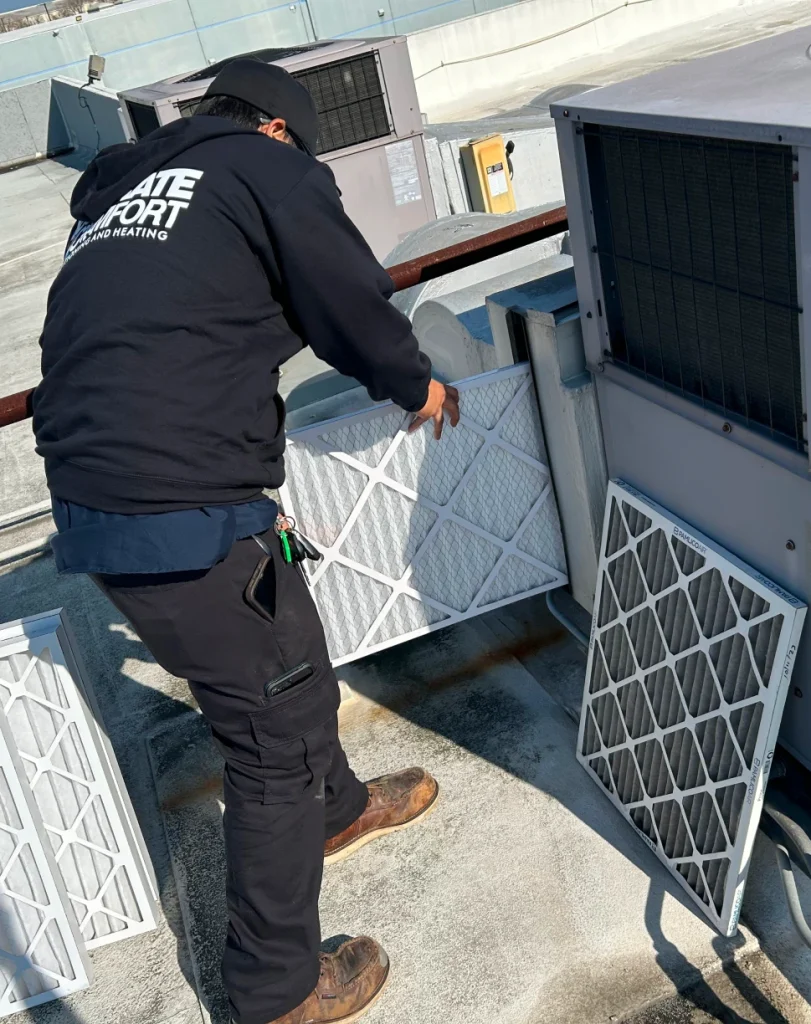
Replacing a standard disposable air filter is often a straightforward maintenance task.
However, homeowners should follow their equipment manufacturer’s instructions and avoid opening electrical or mechanical compartments.
Step 1: Turn Off Your HVAC System
Set your thermostat to OFF before removing the existing filter.
This helps prevent the blower from operating while the filter is removed.
Step 2: Locate the Air Filter
Common locations include:
- Return air grilles
- Dedicated filter cabinets
- Indoor air handler compartments
- Furnace filter slots
Some homes have multiple filters, so check all designated filter locations.
Step 3: Check the Filter Size
Look for the dimensions printed on the existing filter.
Common sizes include 16×20×1, 16×25×1, and 20×25×1 inches.
Always use the size specified for your system.
Step 4: Install the New Filter
Insert the replacement filter with its airflow arrow pointing in the direction of airflow, generally toward the blower or equipment.
Make sure the filter fits securely without large gaps around its edges.
Step 5: Record the Replacement Date
Write the installation date on the filter frame or set a reminder on your phone.
Establishing a consistent HVAC maintenance routine makes future filter replacements easier to manage.
💡 Can a Dirty Air Filter Damage Your HVAC System?
Yes. Allowing an HVAC filter to become severely clogged can contribute to equipment problems.
When airflow becomes restricted, the system may experience operating conditions outside its intended range.
Potential consequences include:
- Frozen evaporator coils: Reduced airflow can contribute to excessive cooling of the indoor coil.
- Overheating furnace components: Restricted airflow can cause excessive heat buildup during heating operation.
- Increased blower strain: Certain blower designs may operate less efficiently or experience added stress under restrictive conditions.
- Reduced heating and cooling performance: Poor airflow can make maintaining comfortable temperatures more difficult.
- Premature equipment wear: Persistent airflow problems may contribute to additional maintenance needs and component failures.
Replacing a dirty filter is one of the simplest ways to reduce avoidable HVAC operating problems.
However, if airflow remains weak after installing a clean filter, the system may require professional diagnostics.
🌿 Does Changing Your HVAC Filter Improve Indoor Air Quality?
A properly selected and maintained air filter can help reduce certain airborne particles circulating through your HVAC system.
Depending on the filter’s efficiency, these particles may include:
- Household dust
- Pollen
- Pet dander
- Certain mold spores
- Other airborne particulate matter
Regular filter replacement helps maintain the filter’s intended performance.
However, HVAC filtration alone does not eliminate every indoor air pollutant.
Effective indoor air quality management may also involve source control, ventilation, moisture management, and appropriate air cleaning equipment.
For households concerned about allergies or airborne contaminants, a professional HVAC evaluation can help identify compatible filtration options.
🛠️ Why Professional HVAC Maintenance Is Still Important
Although replacing your HVAC air filter is an essential homeowner responsibility, it does not replace professional heating and cooling maintenance.
A qualified HVAC technician can inspect components that homeowners may not be equipped to evaluate safely.
A professional HVAC maintenance service may include:
- Inspecting and replacing air filters when needed
- Checking system airflow
- Inspecting electrical connections
- Evaluating blower operation
- Inspecting accessible heating and cooling components
- Checking condensate drainage
- Assessing thermostat operation
- Identifying potential efficiency or performance problems
Regular professional inspections can help detect developing issues before they cause unexpected system failures.
Combining timely air filter replacement with scheduled HVAC tune-ups supports long-term equipment reliability.
📅 Create a Simple HVAC Filter Replacement Schedule
One of the easiest ways to maintain your heating and cooling equipment is to develop a consistent inspection schedule.
Consider the following routine:
Every 30 Days:
- Inspect the air filter for visible dust accumulation.
- Check for unusual airflow restrictions.
- Replace disposable filters when necessary.
- Make sure return air grilles remain unobstructed.
Every 60–90 Days:
- Replace standard pleated filters when recommended by their manufacturer or when dirty.
- Check for uneven temperatures throughout the home.
- Review any changes in heating or cooling performance.
Seasonally:
- Review your filter replacement schedule.
- Inspect filters more frequently during periods of heavy HVAC operation.
- Schedule professional heating or cooling maintenance as appropriate.
Annually:
- Review the condition and performance of your HVAC equipment.
- Confirm that your filter type and efficiency rating remain appropriate.
- Address recurring airflow or indoor air quality concerns.
A simple maintenance calendar can help homeowners avoid forgetting this important task.
📍 HVAC Air Filter Maintenance for Brea Homeowners
Homeowners in Brea, Fullerton, Placentia, Yorba Linda, and surrounding Orange County communities experience varying heating and cooling demands throughout the year.
Warm weather, seasonal dust, outdoor allergens, and periods of extended air conditioner operation can all influence how quickly filters accumulate debris.
Because every household is different, HVAC filter replacement frequency should reflect actual system usage and indoor conditions.
Regular filter inspections are especially beneficial for homes with pets, high dust levels, or frequent air conditioning use.
When combined with professional HVAC maintenance, timely filter replacement can help maintain comfortable temperatures and support efficient equipment operation.
📞 Keep Your HVAC System Running Efficiently With Regular Maintenance
Replacing your HVAC air filter is a small task that can make a meaningful difference in home comfort, airflow, equipment performance, and energy efficiency. Whether your filter needs replacement every 30 days, every 90 days, or according to a longer manufacturer-recommended interval, consistency is essential. If you are unsure which filter your system requires, notice weak airflow, or want to schedule a professional tune-up, Accurate Comfort HVAC in Brea is ready to help. Call 714.325.7042 today to schedule HVAC maintenance, receive professional recommendations, and help keep your heating and cooling system operating reliably throughout the year.